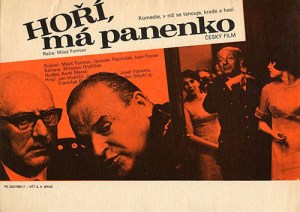
The Firemen’s Ball (1967)

one of the great comedies in cinema history / on art vs. ideology

Firemen's Ball 1Miloš Forman’s The Firemen’s Ball  (synopsis; clip; cast & crew; rating) is a great comedy, which works on several levels: as a direct, accessible, “popular” piece – and as a satire on the (ideological-totalitarian) Communist regime of Czechoslovakia (of 1967). And, while it works very well on the first level, and while one can learn a lot from it about comedy-making, in general, it is the second aspect that elevates it to the level of greatness – indeed, (for me) to being one of the great comedies of the history of cinema. However, it is on this very account (i.e. given the artistic richness that arises precisely from its nature as a satire on an ideological-totalitarian regime) that one wonders whether a specific “experiential” background (namely having personally experienced, or knowing indirectly about, life under ideological-totalitarian regimes) might not be needed in order to fully and thoroughly enjoy all the comedic dimensions of this film.

At the same time, however, we ourselves are also living during highly ideologized times (and things seem to only be getting worse, in that regard); so, sooner or later today’s artists might also have to learn how to speak the special language of hints, allusions, and allegories – which is the language that all artists who tried to remain truthful to art itself had to learn how to speak, under ideological (e.g. Communist) regimes – and which is the satirical language of The Firemen’s Ball. So, as said, there is a lot to learn from this movie – both about how to make a swift, funny, and universally-accessible comedy, and also about how to create art (and how to make humor) in times of ideology. But these are the very reasons why I thought that this would be a timely movie – to re-watch and to discuss.

But let us start with the general, universally-accessible “comedy” dimension of the movie – and in that sense let us appreciate the swift and light-footed pacing of the movie, as befits a good comedy, or a farce. Let us also mention here (because it has to be mentioned) the ever-so-slightly bawdy, even libertine, humor (and spirit) characterizing Forman’s works (see also the films that he made after emigrating to the US), a style and tradition of humor that I would call specifically Bohemian (as in, pertaining to a specific strand in the cultural history of Bohemia / today’s Czechia). Indeed, going back to (for example) Jaroslav Hašek – and to other artists as well, of course – one will observe a certain shared language and attitude, which one could call very worldly (or very secularized), and which is also peppered with accents ranging from bawdy to rowdy; but which is also, and at the same time, lighthearted; and universally mocking; and somewhat cynical; and also light, and playful (a language and attitude which might go back to the experience of the religious wars of Bohemia, and the resulting, generally disabused attitude toward religion, and toward all “hard rules”; see also the fact that Czechia today is one of the most a-religious countries in the world). And yet, let us not get bogged down by epithets that might sound too sour and dour; because, from Hašek to Forman, this is also the language of what one might call (with another famous Czech author, Milan Kundera) of “the lightness of being” (and yet, contra Kundera, not “unbearable”, but making existence bearable, by mocking its self-seriousness). So, overall, quite a “human”, even humanistic – and also quite enjoyable – artistic attitude (Hašek, for example, uses this attitude and this kind of language to counterpose the needs and requirements of basic human life, to the absurdity of war).

So this is a comedy that works on several levels – one using a comedic language of Laurel and Hardy-esque simplicity and universality, and the other functioning as a satire poking fun at the ideological regime (i.e. at “them”) – and also at ourselves, at us all. And, regarding this last item, there is indeed a kind of deep humanity (or humanism) in this capacity to see the comedic in our very condition, in our everydayness, in our failings – in our both incredibly annoying, but also somehow endearing, quotidian humanness and fallibility.

And at this point another aspect would need to be discussed, as well – in order to be able to make sense of the “satire” dimension of the movie; namely, the issue of art vs. ideology. To give a bit of context: this movie was made at a time of relative “thawing”, during the (otherwise oppressive) times of Communist rule in Czechoslovakia; a period of “thawing”, then, during which a kind of “Communism with a human face” (i.e. a more “humane” ideological regime) was attempted, and was still thought possible. The problem, though, with such attempts at “relaxing” regimes based on coercion and control is that, once you crack open the door of the totalitarian system, just a bit, and once you allow a little freedom, a tsunami of free expression will immediately form and try to get through; and, unless you bolt the door again, quickly, through coercion and violence (as it happened in Czechoslovakia in 1968, not long after the making of this movie – when Soviet and Warsaw Pact troops invaded the country, to end this attempt at a “thawing”), that tsunami of “free expression” might end up washing away the very regime (as it happened, at the end of the 1980s, in the USSR, after Gorbachev’s attempts at a kind of “thawing” – at glasnost and perestroika). One should also mention here, just as a bit of context, that the Communist regime in Czechoslovakia was forcibly imposed on that country, under pressure from the “liberating” USSR troops, at the end of WWII; and that, while Czechoslovakia remained a “sovereign” country, it also kept that Communist regime, under the imminent threat of Soviet intervention; and that the Communist regime lasted in Czechoslovakia, as many of you might know, until 1989. Remember, then, in this context, that this movie was made in… 1967.

But, getting back to the issue of art versus ideology – let us begin the discussion by clarifying that for ideological regimes, art is always one of the first targets that they want to take over and control. Without going into too much detail, let us just say that the reason why this happens is that ideologies, being universal and exclusive meta-narratives, which claim to both explain and to fix the world itself, and the entirety of existence, can not bear having to compete with alternate narratives (stories) about reality. At the same time, what is art but a reflection – or narrative – about reality; and what is true art (at least in my conception), but a truthful and poignant reflection of the truth of existence, and of the human condition. However, and as said, ideologies can not bear this – can not bear the existence of competing, even contrary narratives; which is why they (ideologies) always try to censor and to control art, by “cutting out” and “purifying” it of all content that is deemed contrary to the ideological narrative. Of course, once “art” is thus controlled, censored, and “purified”, it ceases actually being art – which is also why “ideological art” always comes across as fake, inauthentic, risible (see “propaganda”; or see the artistic direction that used to be called “Socialist Realism” etc.).

Which is why the true artist, when working during ideological times or under ideological regimes, in order to still be able to create and to express himself, will only have a few choices of action at his disposal: to “write for the drawer” (i.e. to work in secret, without hope of being published in the here and now); to compromise with the regime (or even to become its obedient mouthpiece – in which case art, of course, ceases); or to develop and use (and here we get to The Firemen’s Ball) a specific language of hints and allegories, which will allow for one’s works to still be published, and which the public will recognize and understand, but which the censors will try hard to suppress, albeit encountering difficulties in this process, given its indirectness (although they did ban Forman’s movie, eventually); or simply to leave (to emigrate; which eventually Forman had to do). This movie, then, is an example (and exemplar) of how to do satire on ideological regimes, while living within such an ideological regime  – an example that has perfected said language of allusions, hints and metaphors, through which one can say poignant and recognizable things, without spelling them out (and risking losing access to the public).
Firemen's Ball 2Without going into too much detail about the specific ways in which the movie achieves this type of communication (because that would spoil the fun), I will however point out some aspects, or moments, just for the sake of clarification, and to be able to discuss the “satire” dimension of the movie. Take, for example, the “fire brigade” – which works as a perfect metaphor for the “Communist Party”; starting from the casting, with the “president” of the brigade looking exactly like a Party Leader from any Central or Eastern European Communist country; to the very modus operandi of said brigade: secretive, behind closed doors, and more concerned with appearances, than with true achievements; referring to “the people” as a “them”. vs ”us”; and always making sure, without daring to admit it, that they collect the material spoils; but being keen on maintaining the appearances, for example by organizing a ball “for the people”, and also an “official ceremony” for a “respected” (but in fact ignored and neglected) former “president” of the brigade; and clumsy and incompetent and haphazard in all that they actually do, as it always happens, in such party-states; and abusive and exploitative toward the public, in fact, as evidenced by how they “recruit” (or, rather, “snatch”) the girls for the beauty pageant etc.

But, as mentioned above, and in line with the Bohemian artistic tradition I mentioned, the satire is not directed only at “them” (at the regime) – but also at “us”, at “the people”; because it would be just as hypocritical (as the Party itself is) not to admit that we, too, are also complicit in the system (as another Czech, Vaclav Havel, explained it in his famous essay, The Power of the Powerless) – as without our silent acceptance, or complacency, the regime and its veil of lies would not survive. Thus, in the movie (and quite hilariously) the people partake equally in “the game of appearances and of spoils-getting”, in which the Party )sorry: fire brigade) is also engaged. And this, by the way, is a very accurate reflection of what happens in all ideological regimes, after the initial – and most bloody – period of ideological-revolutionary fervor; namely, that there comes always a period of “settling down”, of a mutually and silently accepted status quo, within which “we pretend that we do not know that they are lying, and that they are out to get their spoils; while they pretend that they believe the we believe them, and try to ignore our own spoils-getting”. A generalized lie, and a merry-go-round of foolery – indeed, but do not forget that the first requirement and demand of life is simply to survive – and most human beings will first of all try to do that; so, “spoils-getting”, perhaps, but that can also be just another name for “the people” doing their best to simply live (survive). Yet this is what great satire does – it penetrates through the veil of appearances, to reveal the truth – and points out both that the emperor is naked (and he is, and most egregiously so) – but also that we ourselves have holes in the bottoms of our pants, as well. And when satire reaches this level of poignant and expressive truth telling, it becomes true and high art (not art with a message – but art as truthful depiction of existence, and of the human condition).

And there are some genuinely laugh-out-loud moments of this kind – of anti-ideological satire – in the movie; that is, moments in which the truth, reality, penetrate through the cracks in the carefully-painted façade; and our laughter comes both from recognizing both the accurate depiction of the ridiculous “façade” that such a regime puts up, and from the contrast between these appearances, and the actual truth of existence, as we know it from our daily experience. Examples of such moments are, for example, the scenes with the one “honest” fireman (and with his wife…) “guarding” the table with the tombola prizes; or when the lights are switched off, so that “the people” can return the prizes that were stolen; and, of course, the scene with the conferring of the “award” on the former president of the fire brigade (who, by the way, comes across like one of those old-guard, true-red, first- generation Commies – who is now stored away, and forgotten, being dragged out only for meaningless ceremonies). Ah, all the hypocrisy, the make-belief, the incompetence, and the generalized profiteering that always – always and without fail! – become the characteristics of ideological regimes – and that constitute such rich fodder for satire!

But there are also some more serious, even moving, moments, in the film (not gloomy, but serious in their humanity) – moments when the “carnival ride” grinds to a close, and the tragic dimension of existence (and of life under such regimes) comes through. Examples would include, of course, the scenes with the old man’s house catching fire, and what happens (with him and with the house) afterward. Indeed – even while instances of pettiness and “small-mindedness” abound even in these scenes (like the buffet manager making sure that they continue to sell drinks, even to the people gathered around the house fire) – there are also some solemn, even spiritual moments; like, for example, when the crowd starts intoning a song, while keeping a sort of vigil around the fire; or with the old man reciting, while watching his whole life burn down, a stammered, half-remembered, “Our Father”. And there should be such moments, as well – because human existence is also tragic – and because underneath this typical Bohemian humor there is also a sense of the “tragedy of existence”.

But at this point the same concern that I stated earlier comes to mind – namely, about the ability of the “average” Western viewer (who has not experienced, or who has not realized that he has experienced, life under ideological regimes) to “recognize” and to “perceive” this satirical (anti-ideological) language. Of course, anyone who is not familiar with the existential experience of living under ideological regimes, can easily address that – and I am thinking of the quasi-experiential means of movies and books on the subject (and there are so many of them; from, for example, Solzhenitsyn’s Gulag Archipelago, which itself is pervaded by irony, and thus by dark humor – to, for example, a more recent movie like Tales from the Golden Age etc.).

At the same time, I also wonder if said Western viewer should not actually be in a hurry to do so – to familiarize himself with the nature of ideologies, and of ideological regimes; and, as a corollary, with the means of (still) making (and consuming) art under such regimes. I say this because, as mentioned before, we do live during highly ideologized times – and the situation, far from relenting, seems to be only intensifying. And one needs to remember that under such conditions – namely, if the false narrative of ideology takes over – the challenge, both for the artist and for the public, will be to learn how to still hold on to what they know to be the truth – and reject the falsity of ideology – while still “surviving”, if possible (still having a job, or even surviving physically). As discussed, there are only a few options available for the artist (and for the public, in fact), in such conditions: (1) compromise, or even active collaboration; (2) resignation to being “cancelled” or “deplatformed”, and to making art “for one’s drawer”, with the hope for a possible future audience; (3) developing a special, subversive artistic language, that can still get published, but which tries to still speak the truth, through hints and allusions; (4) or exile.

And, remember, ideological regimes come in many shapes and forms, in that the false narrative of ideology can be imposed through various means, whether hard (the brute power and institutions of the state) or soft (cancellation; ostracism; peer or crowd pressure; economic pressure etc.). And this is why it is important to remember, especially in such soft-totalitarian contexts (in which the frog is more easily boiled), that the first and foremost duty of the artist (and of every human being with a conscience) is to have the internal courage and awareness to hang on to what they know to be the truth – and to trust that what feels hypocritical and false, is actually so (no matter the moral pretenses or apparent motivations of the ideological narrative). In other words, for such satire (and for such a language of metaphors and allusions) to work, both the artist and (a part of) the public need to still be able to hang on to – and thus to internally recognize – the truth. And there will always be people who can still recognize the truth; because ideologies can do many things (through coercion and violence) – but they can not change the truth.  

To conclude, The Firemen’s Ball is a thoroughly enjoyable and hilarious film – which works both as a general, universally-accessible comedy – and as an existentially reinvigorating satire on ideological regimes. And this is why (today’s) artists and filmmakers can learn a lot from it – on both accounts.


Solaris (1972)

“what is man? a poetic meditation on a sci-fi story”

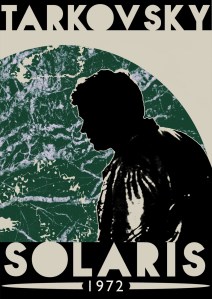
Solaris 3I remember how, after watching Andrei Tarkovsky’s Solaris (synopsis; trailer; cast & crew) for the first time (many years ago), it left me (and I left it) with a slight feeling of incomprehension. But I also remember that I enjoyed a lot – and still do, after my most recent viewing of the movie – the “tools” that Tarkovsky uses to create a futuristic (and, at times, fantastic) world. I am referring here to the use of mid-twentieth century environs and objects (brutalist architecture; concrete tunnels and suspended highways; or the cars of the moment, but with added antennae, and with modified sound etc.); to the choice of filming certain “common” materials and surfaces in such a way, that they can “stand in” for environments and places in the movie (e.g. the close filming of various liquids or of smoke, to create the impression of the Okean – the ocean – of Solaris); and to Tarkovsky (and his cinematographer) using practical and in-camera effects to give the impression of different situations or states of being. The research station itself, in fact, is a good example of how to use available and less-expensive props, to construct a futuristic, even a bit alien, environment – and doing that with creativity and charm (even if the “seams” are sometimes visible). Yes, I liked these aspects when I first saw the movie – and I still like them now; but, returning to my initial point, if last time I saw the movie I left with a slight feeling of incomprehension, what is the situation now, after my most recent viewing of the film? Do I understand Solaris, now? Or, more importantly – what kind of “understanding” are we talking about – or should we be talking about, in fact?
Well, the kind of “understanding” with which I prefer to approach the meeting with a piece of art – and that yields the richest fruits, from that meeting – is (as I mentioned elsewhere) not a rationalistic, “puzzle-solving” one. In fact, I am acutely bored by works that offer – or even demand – only that sort of “understanding”. And I think that the very problem with my initial encounter with Solaris, and part of the reason why I left (almost) empty-handed, that time, was that I was inherently looking for a “rational” interpretation and comprehension of the work, being trained to do so, by previous viewings of works from the “sci-fi” genre (and whether or not this movie can even be categorized within that genre is yet another discussion). For my most recent viewing of the film, however, I adopted (with more courage, I would say, but almost unawares,  or in a natural way) another approach – which is the one that I prefer, by the way; and I could call this approach “poetic-lyrical”, or one in which I allow the piece of art to have its emotional-existential impact on me, without forcing a rational, puzzle-solving interpretive key on it. And you can read more about the results of this specific encounter in what follows:

Thus, the main “result” of the encounter – the principal imprint that the movie left on me – is the feeling that I had just been engaged in a meditation on what it means to be human; a meditation of a poetic-lyrical, and philosophical, and existential kind – and endeavored using the framework of a sci-fi story. A lyrical-philosophical meditation, then, and not the meditation of an “accountant” – which is what Kris Kelvin, our main protagonist, starts out as being. “Accountant” understood figuratively, of course – because Kelvin is, in fact, a scientist; a psychologist, even; but a kind of scientist (who pursues the kind of science) that might represent one of the sad and barren, blind alleys of modernity. In other words, pursuing not the science of “wonderment”, which is eager to search and to discover the human beings – or beings, in general – as and how and where they are; one that is open to being surprised, even overwhelmed, by what it discovers; and one that “reads” reality with all the capacities of understanding and feeling of the human being; no, but a reductionist kind of science, of algorithms and formulae, of reducing reality to what can be quantified and measured; a “science” that in effects blinds the researcher to the fullness of reality, and which yields no meaningful results – about beings; and an approach that, it turns out, is actually inhuman, and thus not fit to understand human beings – or other beings. And Kris Kelvin’s father, Nik, tells “us” these things, that his son has an “accountant’s” approach, right at the beginning of the movie – but we connect the dots only later, realizing also why there is, seemingly, a deep and entrenched mis-understanding, lack of communication, distance, or gap, between Kris and his father. And later we also realize that right at the beginning of the film we were shown the ways in which the father is so different from his son – see his house, which is a re-construction of an “old” (i.e. twentieth century) house, and which is filled with the artefacts of human culture (books, paintings, busts) – i.e. of humanity. Kris, meanwhile, while living at the same place, is instead consumed by his “dry” work – and he even has to be forced by the father to take a break every day, to go out and to walk through (and to gaze at) nature. Because, as Kris himself tells us (with quite some pride), he “is no poet”; instead, he is “interested in the truth” – but a truth as confined by the limits of his “accountant-like” scientific understanding.

And yet all of this will change, brusquely and radically, once Kris gets to the research station that hovers above the surface of Solaris, this planet that had remained “impenetrable” (in terms of being able to dissect it with the tools of rationalistic science) for the human beings, for so many decades – so much so that they are now considering shutting down the entire research station on Solaris (and/or resorting to the most violent means of “science”). What takes place, then, with Kris Kelvin, on (or, rather, above) Solaris, is a sort of “conversion” – from “accountant”, to full human being. And, interestingly enough, it is in and through the encounter with an alien “thing” – with the Okean (this “thing” that seems to be able to perceive, and then to physically manifest, the content of these human beings’ psyche, or consciousness, or selves) – that Kris, and perhaps the other scientists, will re-learn (or maybe learn for the very first time) how to be human.

I really liked the Okean – this ocean on the surface of Solaris, which appears to be a “being”, or ”thing”, of a raw emotional nature; and whom, in consequence, the humans have been unable to “understand” or to communicate with, using the tools of reductionist science; but who will be “tamed” eventually (and with whom contact will actually be made) when it will be given access, finally, to the very raw “selves” of the human beings (by transmitting to it Kris Kelvin’s electroencephalogram); yes, only then true communication will be achieved between this raw emotional self that seems to be the Okean – and the raw and true human selves of the human beings. Because the Okean had been trying to communicate with the human beings, consistently and from the beginning, but only within the bounds and through the means of its own “natural” possibilities – i.e. by replicating (in physical form, through real embodiments) the content of the inner selves of the researchers (and in the process driving some of them almost mad, or at least puzzling them to no end, given that their reductionist scientific paradigms could not even begin to make sense of these… “hallucinations” that were flesh-and-bones).

Indeed, what happens when a civilization that has apparently lost the capacity of being fully human, and that becomes limited (at least in regards to its decision-making) to rationalistic, quantitative, reductionist thinking – what happens when this civilization, through its “scientific” vanguard, meets a being that is only, and purely, an emotional self – and that therefore can only communicate in those terms, and only with the raw human selves? Well, in the movie this had lead, as said, to decades upon decades of in- or mis-communication, and almost to a final disaster -– until the humans succeeded (almost by chance) in finding a way to connect; that is, until they, the human beings themselves, re-discovered their own selves , which then allowed them to communicate that very self to the raw, emotional self of the Okean.

But, getting back to Kris Kelvin’s “conversion”, or transformation, I would have liked for the emotional violence of the initial shock to be portrayed more visibly, more powerfully – and this remark touches in fact on a certain formalism that characterizes (to a certaibn degree) the acting style employed in many of Tarkovsky’s movies (which I do not find appealing – but which I eventually learned to accept as a stylistic feature, or as a specific idiom, within this cinematic universe). Yet the reason why I would have liked a more “violent” depiction of the initial shock underwent by Kris, is that this shock will be the main catalyst of Kris’ thoroughgoing, deep transformation, which will take place throughout the rest of the movie. I am referring, of course, to the initial, self-shattering shock of seeing his wife (who had been dead for ten years) be materialized next to him – and, as it turns out, out of him (his psyche). His wife, who had committed suicide ten years earlier, because she had realized that Kris could never actually love her, nor give himself fully to her – because his work (his dry, rational work) was his true love, and always came first for him, as a matter of an intentional and conscious choice. But not anymore, but not now – because the festering wound that seems to have lurked at the heart of Kris’ self will now produce, through the mediation of the Okean, a being (Khari, or Hari), who is… his wife, “re-born”; and who will soon become, as Kris says, “worth more to me than science can ever be”. And these feelings will remain even as Kris realizes and knows (leading, initially, to attempts to physically get rid of this Khari) that she is a materialization from and by the Okean; but also that she is, otherwise, and in fact, very real indeed: flesh and blood, and true self, and true emotion – i.e. with the emotional rawness and reality of his (ex-)wife. One can even say that Kris accepts this Khari’s “otherness” (that she is, as a “being”, distinct from his dead wife) and yet that he loves her, nonetheless – and even (perhaps) because of and through that.

And what a lovely and moving “being” is “embodied” by the Okean – a being that, although made by the Okean, and reflecting Kris’ psyche, is autonomous and independent from the Okean, in terms of her self-awareness (even if she can never physically leave Solaris) – and which is also desperately “not” autonomous, and literally unable to live without, or even far away from, Kris (any attempt at physical separation leading to very violent and harmful consequences for her). But she is real, yes – and very real for Kris, as well; perhaps even more real than his previous wife; because the relationship that they develop (Kris and this Khari) is itself real and emotional and powerful and close – and probably more powerful than the “original” relationship ever was. But this Khari, having an autonomous consciousness, will end up (sadly, again) being driven to despair by the realization of the fact that she is not, and can never be, the “original” – and seemingly also by the fact that she simply can not believe that Kris will ever be capable of loving her, truly (!) – given that she is not the “original”. (But I confess that this aspect, of the reasons why this Okean-born-Khari succumbs to despair, is one that I did not fully “understand” – in terms of a full and rational comprehension of the motives.)

But Khari – while ever so lovable and fragile and beautiful (as portrayed by Natalya Bondarchuk) – and while so important for the change that Kris undergoes – is not, however, the central theme of the movie  (although she is its central “mechanism”, and where its “heart” beats, or starts beating). The theme of the movie, instead – its core subject – seems to be “the discovery of humankind” – in the ironic context of the fact that they (we) have to go to a different planet, and encounter an alien “being”, in order to discover (again) what it is to be human.

Solaris 7
(image source)

“Being human”  – a condition whose artefacts are strewn throughout the movie: from Nik Kelvin’s house, as mentioned; to the “library” on the station, which is also their main meeting place; to conversations between the scientists (with running references to Don Quixote, Tolstoy, Faust, Dostoevsky, and the like); to the classical music that plays on the soundtrack (Bach, of course  – and others); to the paintings (e.g. the gregarious Brueghel; or Andrei Rublev’s icon of the Trinity, used in a nice act of cinematic self-reference); to the busts of philosophers and to primitive art; and even to certain artefacts of science itself (e.g. a model of the human body). All these are manifestations of what it means to “be human” in a way so much richer, and broader, and more complex, than what an accountant-like, reductionistic approach, could ever begin to fathom and to understand (and, remember, Kris is supposed to be a … psychologist; that is, a knower of the human psyche – task at which he fails miserably, both as an “accountant”, and as someone who has no real understanding and awareness of the content of his own self).

And here we can recall how Kris dismissed the witness of one of the first people who had engaged with the Okean, Berton – how he brushed away his testimony as “scientifically nonsensical” talk of the “soul” and the like etc. In this sense, Kris’ path to becoming fully human is also a path that leads to the (re)discovery of a broader way of doing “science”, of a broader kind of “understanding” – one driven by wonder, and one that is fully open to being, to reality (instead of shutting itself up to it, in the name of – and by virtue of – its narrow-reductionist instruments).

And his trajectory of transformation will also take Kris Kelvin from being a thwarted, wounded, internally-warped human being – to being healed, to becoming fully human. And perhaps this is the meaning of the last scenes of the movie, as well  – scenes that, it turns out, are actually a materialization from the Okean, reflecting presumably Kris’ psyche – and in which Kris Kelvin, who in reality decided to remain indefinitely on the Solaris station, gets to reconcile with his father, at his father’s house (a father who, as said, seems to embody or represent a fuller understanding and existential expression of humanity). And this reconciliation also seems to embody, symbolically and factually, the inner healing of Kris’ self; him becoming fully human.

Having said all this about the “story” of the movie, about what “happens” in it, let me now remark on a realization that struck me quite powerfully, while watching the movie – namely, of what I would call Tarkovsky’s “courage to make high art”; a courage that, to put it quite bluntly, I would be hard pressed to find in any (really, in any) of today’s film directors (well, Sophia Coppola might come to mind, as an exception from that, and regarding certain aspects of her work). I am referring to the fact that Tarkovsky dares to “speak” the language of high art; and to speak about and to make direct reference to high art; and to say important things, about the most essential dimension of the human existence; and to say all this in a strikingly beautiful manner. For example, even daring to ask “what it means to be a human being” – and to use the language and the artefacts of the accumulated human civilization to address this – is a feature hardly encountered either in film, or in art, more generally. Who does this anymore – in a veritable, genuine, truly artistic manner? But perhaps this dearth of real art and real humanity only confirms the core message of the film – about our modern age’s cultural reductionism, and about the subsequent loss of humanity, which follows in its footsteps; because, indeed, we seem to live that kind of impoverished existence, and to feel its consequences in art, in science, and in the types of “understanding” that are deemed acceptable in our times. (And when I refer to Tarkovsky’s “courage to make high art”, this does not mean some empty, pompous, formal, snobbish references to “Western civilization”, or to “Culture”; something like building in “Gothic” style, in the twenty-first century, in an act of meaningless and inauthentic imitation; no, I am referring instead to the courage of asking the essential questions – and of knowing, engaging, and being able to enter into a dialogue with, the answers that the human beings have given to these question throughout their history, throughout civilization; and to being able to speak the language of “human civilization”, naturally, with ease, and at the highest level.)

But experiencing Tarkovsky’s “courage to make high art” can also act encouragingly with regards to our own internal (artistic) cowardice, cowardice into which we might have been cowed as a result of being surrounded, overwhelmed even, by tremendously unambitious, mediocre, low-aiming “artistic” endeavors – and because one is not sure if there is even a public, anymore, who would be interested in hearing, let alone be able to engage with and to understand, such an (high, ambitious, meaningful) artistic language.

Another aspect that struck me about the movie Solaris – an aspect that “lingers” throughout the movie, appearing in flashes and brushstrokes – is “beauty” itself; its presence, in many different forms – its daring and comforting presence. Beauty being – we realize, now – another essential (and unique) manifestation of being human, of a full and true humanity.

A few more remarks – bits and pieces – about particular aspects or moments that have caught my attention; for example, the presence of a horse, which is one of the leitmotifs of Tarkovsky’s movies – and who, for me, represents the artist (as an instinctive, emotional, free, unruly, yet beautiful being; who is naturally what he is, and can only be what it is). (Indeed, an artist is like a bird – and “a bird can but sing”, because that is its nature; as explained in the movie The Lives of Others, by an officer of the secret police, the found out that breaking the “bird’s capacity to “sing” is the most effective and definitive way of breaking its very being.)

As I mentioned above, I also liked the fact that the Okean is portrayed as such a raw, emotional being – and also the fact that the woman, Khari, is also portrayed as an essentially emotional being  – and frail, vulnerable, and very lovable, because of that; a kind of portrayal that, again, few would have the courage to pursue, today (but here, again, we are talking about the courage to make art; and what is art if not the expression of truth, as it is, where it is, and how it is?).

Let me conclude with a quote, whose exact spot in the movie I can not recall (but which must be from one of the many conversations between Snaut and Kris) – something about “the mysteries of happiness, death and love” – because it seems to encapsulate quite aptly the richness of a true (artistic, lyrical-poetic, wonder-driven, fully human) understanding of what is a human being.

And let me conclude with a question, as well: namely, whether Andrei Tarkovsky is one of the last exponents of this classical understanding – or, one could say, this understanding cultivated within Western civilization – of what is a human being.

And let me also conclude by attempting to answer my initial question, which started this discussion – namely, whether I “understand” the movie Solaris, now, after my most recent viewing of it. In order to answer this question, I will make a reference to what the movie itself seems to teach us – namely, that the only possible approach to grasping the fully human, is one that is driven by wonder, and that is characterized by an openness to the entirety of the human experience – including its past expressions. And art – according to a long-standing convictions of mine – is the branch of “knowledge” or human expression that is most adept, naturally, to reflecting the fullness of the human experience (while being informed by the other branches of knowledge, in a broad-humanistic vein). In other words, that (although this might sound like a tautology) the only possible approach to art, to poetry – is an artistic, or poetic, approach; meaning that a rationalistic, puzzle-solving approach will be inherently reductionist, and will thus result in an impoverished understanding – or in a mis-understanding – or a complete lack of understanding, and of communication (see Nik and Kris). So perhaps my first reading of the movie was (involuntarily) closer to an accountant’s (I repeat, involuntarily – because of being acculturated, by so many movies within the “genre”, to read them in a certain key, that tries to extract a meaning and a rational conclusion) – while my most recent one was maybe closer to a truly artistic (i.e. poetic, i.e. closer to the fully human) one.

In addition, one should also note that Tarkovsky’s cinematic language is irremediably (and beautifully, and happily so) lyrical (poetic) – which means that his movies can only be truly approached, read, and engaged, in a lyrical (poetic) key. Which is one of the reasons why Tarkovsky is one of my favorite directors in the history of cinema.

The Silence (1963)

“or, the lack of communication”

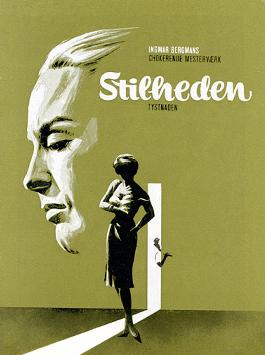
The silence film_posterTogether with Through a Glass Darkly and Winter Light, The Silence (synopsis, trailer, cast & crew, rating) is part of Ingmar Bergman’s trilogy dealing with (or, rather, inquiring or searching into) issues of faith and of God. Formally, this is relevant information – but we better look at the movie itself.

The first question that emerges is how one should approach (or “read”) this movie. Is it a poetic, lyrical piece – in which case one lets the images and actions on the screen act upon one’s sensitivity, emotions, imagination – or is it a narrative (prose, prosaic) work, in which case one struggles to understand what exactly is happening or has happened, what are they doing and why etc. I found that for me the lyrical-poetic approach works best with this movie.

I should also note that, before watching the film, I read the script that Ingmar Bergman wrote for it (he is the writer and director of this trilogy, so these are the personal works of an auteur). Based on that, I can say that The Silence works better “as” a film, with moving images and sound, rather than as a text. I say this, because that is not necessarily the case with the other two films (and especially Through a Glass Darkly). But this movie’s title is The Silence, and it helps to be able to hear that silence – or, for example, the unintelligible noise that is a stand-in for silence, or for lack of comprehension, or for incommunicability.

Approaching then the movie as a poetic work (which means that one is less interested in what exactly took place, and when, and by whom – than in perceiving aspects and states of existence), the main impression conveyed (and perceived) is that the principal theme of the film is the lack (or even impossibility) of communication, in the broadest sense. This can be conveyed, indeed, by a noisy street, where the white noise of the daily hustle and bustle combines with the strident, cacophonic noise of the cars and of the street vendors. It can also mean actual lack of communication – or impossibility thereof – as between the two sisters (the movie’s three main characters are a younger sister and her child, and an older sister, who travel through a non-descript, foreign country, and stop at a hotel – while one of the sisters is ill, even dying). Incapacity of communication: the entire story takes place in a foreign, even alien country, whose language and habits are different and themselves “foreign”. And also to the same issue of the lack or impossibility of communication pertains the sexual behavior depicted on the screen (from vain attempts at self-love, to casual, purely physical sex. All these are examples or manifestations of said lack of communication with other human beings – and, more deeply, of a breakdown of human relationships.

And this lack of communication – “supported”, as it is. by sentiments of hatred or resentment –  seems to be a symptom or manifestation of a deeper problem – of a lack of love and of faith. One of the characters had a fleeting sexual encounter (or so she says) behind the colonnades, in a church; what better image for replacing divine love with an unfruitful attempt at self-satisfaction?

(Speaking of these sexual dimensions, I noticed that for some critics or spectators this is the main, most remarked on, trait of the movie. For myself, I found that these aspects, although more directly depicted than in other movies of that era, are nevertheless filtered through an artistic lens – and, yes, it matters if one is able to take them as metaphors for something else (as I am), or simply as acts or actions. But for more info on this, see the movie’s rating.)

Lack of love, then – of affection, of relationship, of the possibility of relationship… but why? I don’t know – or, rather, Bergman hints at some of life’s obstacles to forming and keeping relationships (which I will discuss in a second) – but mostly, it seems that the underlying cause is the fact that these characters (and possibly Bergman himself, in his mid-twentieth century Sweden or Western Europe) inhabit a world that has been voided of God, faith, love, sense. An emptied world, in that sense – and yet the yearning (which is deepest in the human being) for love, remains and thus destroys (most of) these characters. But let’s not get too far off from the film itself, with our interpretations.

As said, Bergman – or, rather, his characters – hints at some of the obstacles to relationships; some of these have to do with all that accumulation of dirt, hurt, of incomprehensible inner impulses and emotions, of a relationship’s historical memory – all that is, let’s say, visceral and murky… And this takes me to one of the major strengths and points of attraction for me, with regard to Bergman’s films, which is his capacity to depict the cellular-level tissue of existence, of life – those inexpressible and un-conceptualizable strata of ourselves and of our existence that form the mundane soil of our everyday life. “Depict”, I say, because they need to be “depicted,” for example on the screen – because they cannot be “said,” expressed, through words (hence incommunicability). (But poetry is born as the artform specifically suited to express these ineffables of existence.) So these “interstices” of existence are very much present and depicted in Bergman’s films – while, at the same time, they are mostly lacking in the typical Hollywood movies (which is why, perhaps, both characters and actions in these movies tend to come across as unidimensional  – because, more often than not, both characters and actions in these moves are sublimated into clear, univocal acts or traits – but that is not truthful, because we, as humans, as not unidimensional, are more complex, and not all is expressible in words; and thus we find that these movies are ultimately unsatisfying, and even feel a bit fake – unless one gets too accustomed to them).

Parenthesis: on the other hand, while this is a strength in Bergman’s movies (or so I find), and in other movies of this kind, there might also be an inherent danger in this exploration of the murky interstices of mundanity. After all, there is such a thing as a “micro infinity” – namely, dissecting physical existence into smaller and smaller sub-atomic dimensions – there is no end to that. Similarly, one could get lost – theoretically – in going deeper and deeper into the murky and confusing interstices of existence; there is that danger, as well. I am not suggesting that Bergman engages in that; I was just pondering on the right authorial strategy: without the complexity of existence, and our confusing and incomprehensible parts, life depicted appears fake; but prudence is needed, as the goal– for me – is realistic depiction of the truth of existence, and not a hubristic attempt at all-comprehension, or a wallowing in the layers of the soil of mundane life.

Another strength of Bergman’s movies (presumably related to the first) is his ability to construct and to depict real human relationships– as they are. This is why his Scenes from a Marriage (the film from 1973) is one of my favorite movies on the theme.

But back to the topic that we were discussing, of the obstacles to communication (and to relationships). Ester, the older (and ill) sister seems to refer to these accumulated obstacles, when she talks about the fact that “you need to watch your step among all the ghosts and memories”; or, talking of “[t]he forces [that] are too strong… the horrible forces”; or even of the off-putting “erections and secretions” (the viscous physicality of existence). Indeed, (helped by their acting) we perceive that in-between the sisters there is an entire past, with so many contradictory events, emotions, hurts, reactions etc., and that it is inexpressible, unclarifiable, unsolvable – and that this past is part of the reason why they can not communicate (or have a functional relationship); other reasons are implied as well. These accumulations of the past might also be responsible for the fluctuating behavior of the two women – for example, in how they relate to other people (Anna, the younger sister, alternates between being overly affectionate, or quite cold and rejective, toward her son, Johan).

We were saying that the movie is, or seems to be, about the lack of communication, and the lack of faith and of love. Let’s add here – as it is related – that in the film there is also a sense of a world that is alien, unknown/unknowable, and frightful; see the “war” themes in the movie (the trains carrying tanks, the warplanes’ flight over the city, the rumbling and then menacing apparition of a tank, on the street, in the night; the soldiers in the café – and so on); the presence of war, in other words, somberly and mutely threatening. Or the theme of the hotel, as explored by the young boy, Johan.

Here I should remark – in connection with what was said beforehand – that Bergman does a swell job in depicting the way in which a child sees or experiences the “wide world” – from the intimidating encounter with sickness or death, or with conflicts between the adults, to the incomprehensible behavior of your parent, to the strangeness of large, impersonal buildings (to be explored, but also threatening), to meeting strange strangers who speak in strange tongues about foreign things – in other words, the way in which for a child sees the things of the world of the adults, and of the world “at large,” as it were. In this movie, the child who experiences these is Johan – and his experiences represent another manifestation or expression of that incommunicability and incomprehension that I see as the central themes of the film. (And I was wondering, while watching Johan and his adventures – is this child Bergman? or is he us – versus the world? Or, even, is this a reference to some actual childhood experiences or memories of the auteur?)

There is a moment in the film when Johan, the boy, “stages” a marionette play (Punch & Judy type) for his ill aunt, Ester. It is the shortest play, because it quickly devolves into Punch “punching” Judy, while shouting incomprehensible things in a made-up language. When asked what this is about, Johan responds that Punch “is scared, so he speaks in a strange language” (and also erupts into violence toward his mate). Quite a clear hint at an interpretive key for the movie. Our existential anxiety – in a world that seems alien and emptied of meaning – also manifests itself as fear and through hurting others – and ourselves. This, of course, if this is in fact the world; but is this our world, my world? In any case, it is the world proposed and depicted by Bergman in this movie; and this might just be him pulling the alarm about, and critiquing, or even diagnosing, Western or Swedish society around the middle of the twentieth century. (But we are getting again pretty far from the film itself.)

The movie ends with Ester, the older one, drawing some conclusions about life and about herself, while she is agonizing in what is probably her deathbed (in her hotel bed). Johan and his mother, Anna, leave to continue their journey toward home, toward Sweden – but not before Ester starts writing, and then gives to Johan to take with him, a sort of embryonic “dictionary” of the language spoken in this foreign country; for example, what are their words for “hand”, “music” etc. She tells Johan – or us, the spectators, I am not sure right now – that he will discover later how important this is; this, what? Well, I assume, a dictionary means to have the words, to understand, to be able to communicate – to have a gateway into existence. Communication, as the entry point into relationships – and thus, to love and meaning (and, why not, faith).

One should also add here that the sole thing that constitutes a point of mutual comprehension and reciprocal communication between these Swedish guests and the locals (in this alien country), is music (either as Bach works played on radio, or as the words “Bach” and “music”, which turn out to be the same in both languages). Music, as an aesthetic alleviator of aloneness, alienation, incommunicability – and lack of meaning.

Yes, one could easily take this movie as a critique (or critical depiction) of a certain society – or of a certain mode of existing. Since a poem is a self-enclosed something, a universe unto itself, self-sufficient, so this movie (and films such as this) can work by depicting “one type” of world, or “one type” of existence (which might not represent the entirety of existence, or of the human possibilities). But a poem is an accentuated, hyper-sensitive depiction of one thing, of one aspect – that faces us with that aspect; in other words, most poems are not encyclopedias, intending to explain all of existence. But, by facing us with the “concentrated” version of one aspect (or type) of existence, it can force us to take it seriously, and thus to make a decision, about and for ourselves, about that specific issue. For example, we can leave this film (or the poem) with the impulse of thinking about how we can best avoid, or avoid falling into, such an empty existence – both as individuals, and as a society. A poem can thus function as a via negativa, revealing something (e.g. need for love or for meaning) by illustrating its absence. And this might be the way in which The Silence becomes part of the Bergmanian trilogy on God (or lack of, or search for God), on faith – and on existence in the 20th century.

I will conclude by saying that I am afraid that due to this discussion, and to the themes we covered, the movie might come across for you as gloomy and…; while in fact I left this film – as it usually happens with Bergman’s movies – energized and engaged; and I assume that this has to do with the cathartic effect that true artworks have on us (see the Greek tragedies’ effect on their contemporary spectators) – namely, artworks that speak to us by touching on aspects of the truth of reality, of existence; yes, there is something very rewarding and moving when one encounters real communication about real things (even if that thing is “the lack of communication in a God-less, and thus sense- and love-less, world”).

I mentioned at the beginning of this discussion (and I promise that this is its last remark) that my approach to and “reading” of this movie was poetic, lyrical; letting the images and sounds, the humans’ actions, the emotions depicted, enact their effects on my capacities of perception and feeling (just like I would do with a poem or a painting). And I think that that was a good choice, because I dare say that, taken purely prosaically, this movie would not “work” – i.e. if one would approach it very prosaically, as a puzzle to be solved (who does what, when, why, and what is the conclusion). There are too many gaps in information for the movie to work in that sense – and it would soon become frustrating, or unrealistic (un-pragmatic), in that case. And here we arrive at the criticism often raised against so-called art(sy) movies – regarding their incomprehensibility, pretentiousness, remoteness from everyday experience (and the everyday viewer). Well, if a movie is “artsy” and only artsy, (for artsiness’ sake), then I am fully on board with rejecting such snobbish and pretentious nonsense. However, in my reading, this is not that. But does it have moments when there is a slight hint at pretentiousness, at a certain abstracted mannerism? Perhaps, a few; for example, I found Gunnel Lindblom’s writhing in bed, as she was alternating between hysterical crying and manic laughter, pretentious, mannered and unnecessary.

But I am certain (and I am not the only one) that this movie is not intended simply as a pragmatic narrative  – it is designed to appeal to our poetic sensibilities; it wants us to feel, to perceive, and thus to understand existentially – or, as I said, poetically. So, I left this movie engaged and replenished with thoughts and feelings about true, real, existential things – thus a rewarding experience. However, I will note that of the three films in the trilogy, Through a Glass Darkly, Winter Light, and The Silence – all of which I appreciate and I have enjoyed – this might be my least favorite (and yet still an engrossing and rewarding experience, and a movie that I would recommend, for those interested in such fare).