
actioners, old and new & a classic murder mystery
Death on the Nile (1978) / The Sea Wolves (1980) / The Day of the Jackal (1973) / 6 Underground (2019)
Death on the Nile (1978)
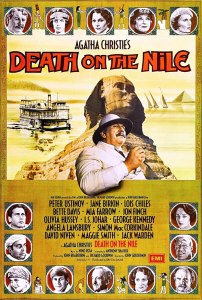 Death on the Nile (about; trailer) is one of those classic, star-studded movies, of the kind so few are made nowadays, to our misfortune. Let us just look at the cast, in this case: Peter Ustinov, David Niven, Mia Farrow, Bette Davis (!), Maggie Smith, Angela Lansbury, George Kennedy, Olivia Hussey (of Zeffirelli’s Romeo and Juliet fame) etc.
One thing that I did not remember about the movie, is how funny it is – firstly, in the way in which Ustinov plays Poirot – but also through other characters, interactions, and specific scenes – e.g. the somewhat campy, perpetually falling apart character of Angela Lansbury; the brutal repartees between Bette Davis and her “assistant”, Maggie Smith; the characters dancing the tango; Poirot harassing every single passenger, in the aftermath of the crime etc. I also forgot just how bloody Agatha Christie’s stories are. And one can be but thrilled about, and enjoy, the Egyptian locations featured in the movie. I also remarked and liked the muted scene at the Temple in Karnak – with the characters wandering about, in the sunny, dusty, quiet midday – until something happens… Finally, I should also note how much more engaging and thrilling – how much more sanguine – this movie was, compared to the most recent Murder on the Orient Express (2017), which was Kenneth Branagh’s laudable attempt at putting together an all-star type Agatha Christie movie, but which (although I was very favorably inclined toward it) ended up being rather forgettable.
The Sea Wolves (1980)
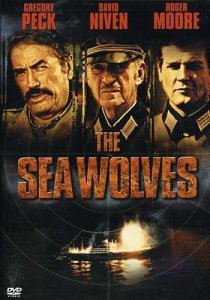 Speaking of all-star casts and “classic movie types”, The Sea Wolves (about; trailer) is a delightful exemplar from another subgenre: the war movie showcasing the heroic actions of a small group of misfits (played by a group of major Hollywood actors) during World War II. Movies like Where Eagles Dare or The Guns of Navarone come to mind, as other top-notch examples of this subgenre. In the case of The Sea Wolves, the cast includes Gregory Peck, David Niven (again), Roger Moore, Trevor Howard etc. And what a pleasurable romp it is, this movie – the enjoyment being but amplified by the fact that the misfits in this story are the “retired” English gentlemen (veterans of the… Boer Wars!) of the “Calcutta Light Horse” territorial defense unit in India (who are deeply dissatisfied with their current roles, and are itching to make their own significant contribution to defeating the Nazis). Yes, this film has it all: the colonial atmosphere, the British fighting spirit, the humor, and quite some action. I have seen the movie, therefore, many times, and (allowing for enough time between successive screenings) it never fails to entertain. Although the spy story within the movie (featuring Roger Moore, mainly, but also Peck) has its own charms, I am always more attracted to, and entertained by, the adventures, the fighting spirit, and the amusing peccadilloes of the gentlemen of the Calcutta Light Horse. Moreover, the fact that this movie is actually based on a true WWII story gives it additional, beneficial weight, making its heroes even more endearing.
The Day of the Jackal (1973)
 If you watch the movie shortly after reading Frederick Forsyth’s bestseller book, the film (about; trailer) will probably come across as a bit of a disappointment; what the impression will be, if you have not read the book, that I would not know (at least, not at this point). And this is not about the usual and necessary differences between a book and a movie – differences with which I am well familiar, and that I take into account, implicitly. In fact, when it comes to the thriller genre, I would say that movies based on such books usually turn out better than their original source material (think of movies based on Grisham or Crichton books). It is also true that the slight disappointment with the movie, in this case, might just point to the fact that Forsyth is a much superior writer (within the genre), compared to the aforementioned ones; perhaps. In any case, I can only refer to this movie in implicit comparison with the book – and to the fact that, in that light, it is something of a letdown; so let us count the reasons why:
First of all, the casting choices, more specifically with regards to the title character of The Jackal; as Edward Fox comes across more as a Bond-type figure, instead of the silent, grey and inconspicuous (when he wants), yet somewhat attractive (when he so wants), but, deep down, “dead inside” character – that Forsyth constructs (so nicely) in his book. In addition, Fox’s interpretation fluctuates throughout the movie, somewhat inordinately. Second, the plot of the book is wisely constructed on the tension and conflict between poles – between two people who never meet, but are engaged in a cat-and-mouse game, right until the bloody end: The Jackal, and Deputy Commissioner Lebel. Well, this tension between two distinct yet so similar poles never really comes alive in the movie, as Lebel is depicted somewhat passingly, thus never acquiring the necessary “weight” needed in order to constitute a real counterpoint to Le Chacal. Third, the murder scenes in the book are much more life-like, chilling, and therefore gruesome – which is not the case with the murder scenes from the movie, which either came across as a bit clumsy, or were not actually shown on the screen (this, of course, might have to do with the accepted film aesthetics of the time, especially with regards to blockbusters – to movies made for general consumption). Finally, in the movie the story feels rushed, boxes being quickly checked and then passed over, in a hurry toward the finish; this, notwithstanding the movie’s runtime of almost two and a half hours. This, of course, can be written off as simply a limitation of the medium, especially in comparison with the complexity of a book; yes, one could suggest that, but I do not think that that is where the problem lies. Instead, I think that a wiser choice in terms of where to put the emphases – on certain moments, on certain characters (two or three) – that is, choosing wisely the “gravitational points” of the story – might have resulted in a different final impression – and in a more balanced, clearer, and better delineated story (without this feeling of trying to cram too many things in too small a space).
One of the things that I did like in this movie (a lot) was them using the real Bastille Day celebrations – with parades and all, police presence, and actual Parisian crowds – as the setting for what in the story would be the Liberation Day celebrations in Paris. This provided such a feeling of authenticity and immersion that, for me, it turned out to be the stand-out experience within this movie.
As said, you might come to slightly different conclusions, if you do not happen to read (or to listen to) the book right before watching this movie; perhaps, but I am not sure of that – because I think that these aspects, which I just mentioned, represent dramatic and filmmaking weak points whose effect one will feel (even if one will not be able to pinpoint them, specifically) whether or not one is familiar with the source material. Speaking of the source material, the original story, in all its details, is superb and gripping; a thriller that immerses us in a real historical moment (France under de Gaulle, at the moment of the Algerian civil war, and on the brink of an internal civil war) and in the universe of the political and of the law enforcement institutions of France (and of the UK).
6 Underground (2019)
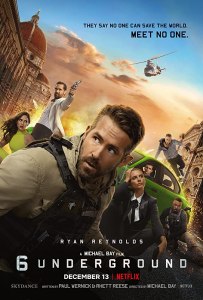 I must confess that I found it quite irritating to see how many of those end-of-the-year, “worst movies of 2019” lists included 6 Underground (about; trailer) in their selection – doing it with a certain glee, as well. And no, I did not find this irritating because I consider 6 Underground some sort of a masterpiece – but because this kind of choice and this kind of attitude illustrate, for me, a type of snobbishness that is in fact an obstruction to a real engagement with movies, and with the art form as such.
With regards to Michael Bay, there are, generally speaking, two opposite approaches – one being a hasty dismissal of him and of his work, or (at the other end, and often to spite the opposite position) proposing him as a sort of visionary genius. Although both positions have a gram of truth in them, I would argue that neither represents a healthy approach to movies and to the art form. On the one hand, Bay does have a style and an aesthetics that he has developed, and that are truly his own (best exemplified by the Bad Boys movie of 1995) – and that many have started to copy (because of its success). On the other hand, he is also the tremendously successful (financially, that is) maker of those empty, noise-and-light spectacles that are, for example, the Transformer movies. My point, therefore, is that a balanced approach, of one who actually likes movies, filmmakers, and filmgoers, should be able to appreciate and to consider both these aspects, simultaneously; that is, admitting both the fact that Bay has created an original aesthetic style (which has both its good aspects, e.g. his ability to cut down everything, images, sound and action, to their most impactful essentials, to their most striking “barebones” – with the directness of, say, a rollercoaster, and with the shamelessness of Las Vegas aesthetic) – and also that he is the money-making mastermind behind mind-numbing and ear-shattering thrill-rides like the said Transformers series. The Transformers movies, which I would liken to a ride at a country fair: not everybody hops on, and yet sometimes you yourself will choose to hop on, and even to add some greasy food to it, just because you are at a country fair.
And this movie, 6 Underground, fits right between those ends – between certain aesthetic skills, and sensory overload – and, truth be said, with not much to set it apart, as a movie, in any extra-ordinary way. In other words, if approached with the required levelheadedness, and with an awareness of Bay’s style and portfolio, there is no specific reason to include it in a “worst of” yearly list (lists that, as we know, are both entertaining, and also, in effect, disingenuous – as it is pretty obvious that they do not contain the actual ten worst movies of the year, as selected from all the movies made in the world, at all the levels of the movie industry). Thus, it is the lack of artistic discernment and the cheap snobbishness that (often) lie behind the choice of including this movie on such a worst-of-the-year list, that I find most irritating – because they reflect an artistic lack of earnestness and superficiality that are not unlike what they are accusing Michael Bay of.
Because, if you want a real “worst of” movie from the Bay catalogue, you have to go no further than Pearl Harbor (2001); now that, indeed, is some offensive cinema-making, as it takes something that is deeply meaningful and tremendously rich (in historical, emotional, cultural, and general human content), and debases it and vulgarizes it, replacing all that real meaning with sensory noise, empty action, and superficial emotions. In other words, the offensiveness of that movie comes from the egregious and off-putting dissonance between what its subject would require, and what its content should be – and the completely inadequate, and ultimately disrespectful, treatment that it received from its director. But a similar dissonance between content and form does not emerge when you take, say, raw chewing gum (that is, some inessential content, whose only purpose is momentary enjoyment), and you give it a coat of artificial coloring (which simply enhances its entertainment-focused purpose). And 6 Underground probably could be characterized as such a “purely entertainment-focused” fare, which has no deeper meaning, and does not really intend to have such a meaning; but which does what it actually sets out to do – namely, to entertain, in the moment, in typical Michael Bay fashion. (The only thing really standing out about this movie is the number and variety of exotic locations, which point to the large sums of money probably put at Bay’s disposal by Netflix; which, by the way, is neither my nor anyone else’s business.).
In fact, for me the only distinct artistic takeaway from watching 6 Underground is related to a ongoing qualm that I have with so many moviemakers of our day (especially from the genre of action movies); that is, the fact that so many of them do not seem to understand (or, if they do, that they do not act based on that understanding) how essential the presence of real actors – who are able to create tridimensional, flesh-and-bones characters – is, even in a silly action movie. Compare, in this movie, the screen presence of Ryan Reynolds (who is a real actor), with the presence of – well, all the other actors, whose main distinguishing trait is (a common mistake among these filmmakers) that they are either athletic, or attractive, or both – but not real character actors, and thus never becoming “real persons” on the screen. In other words, my problem with so many filmmakers is that they do not seem to understand that what audiences connect with are human beings, with their human stories – yes, even (!) when there is some outrageous action happening all around. And to conclude I will mention one of the best examples of how to do such a thing well: the first Die Hard movie, in which, while the action is relentless and often spectacular, what draws us in, and the reason why that movie remains a favorite of many, is that we care deeply about, and are invested with, what happens to the very sympathetic, emotionally raw and physically vulnerable, and funny – in other words, the very human – character of John McClane, as portrayed excellently by Bruce Willis.
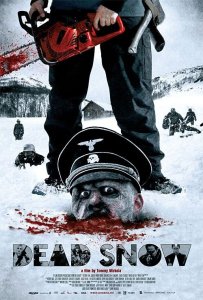 Tommy Wirkola’s two movies, Dead Snow (
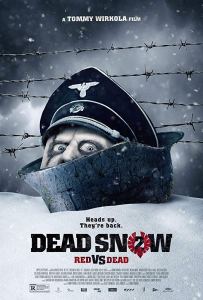 It is not by chance, then, that Dead Snow makes reference, both textually and filmically, to those movies. However, these are not some Evil Dead “wannabes”; no, these are original works, while also being fully aware of the cinematic universe that preceded and that surrounds them (and not only within the genre; thus, in DS 1 one of the characters is a cinephile who often references or quotes from other movies; while in DS 2 the clash between the Nazi zombies and the Soviet ones is informed, visually, by the choreography of the battle scenes from Braveheart – for example).
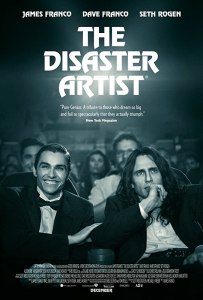 The Disaster Artist (
 AFTERFILM